

At LitWeb, we celebrate the literary world by offering comprehensive biographies and bibliographies of authors from around the globe. Whether you’re a student, researcher, or simply a book lover, you’ll find valuable information to deepen your appreciation for the authors who have shaped our literary landscape.
Discover Your Favorite Authors Dive into detailed biographies that provide insight into the lives, influences, and achievements of your favorite authors. From classic novelists to contemporary writers, we cover a wide range of literary figures.
Comprehensive Bibliographies Explore complete bibliographies of the authors you admire. Our extensive lists include all major works, lesser-known publications, and even unpublished manuscripts, ensuring you never miss a piece of their literary journey.
Featured Authors Each month, we shine a spotlight on a selection of authors, offering in-depth articles, interviews, and unique insights into their works and lives. Stay updated with our featured author section to discover new literary talents and revisit classics.
Join Our Community LitWeb is more than just a resource; it’s a community for literary enthusiasts. Join our forums to discuss your favorite books, share reviews, and connect with fellow readers. Subscribe to our newsletter for the latest updates, exclusive content, and special events.
Search and Explore Use our powerful search tool to find information on thousands of authors and their works. Filter by genre, time period, nationality, and more to tailor your literary exploration.
About Us

Our Mission
At LitWeb, our mission is to foster a deeper understanding and appreciation of literature by providing comprehensive and accurate information about authors and their works. We aim to be the go-to resource for literary enthusiasts, students, and researchers worldwide.
Our Team
LitWeb is created by a dedicated team of literary scholars, researchers, and passionate readers. Our diverse backgrounds and shared love for literature drive us to continually expand and improve our database, ensuring it remains a valuable and up-to-date resource for our users.
Contact Us
Have questions, suggestions, or need assistance? We’re here to help! Reach out to our support team via our contact form, and we’ll get back to you promptly.
Author Biographies

Explore the Lives Behind the Words
Our author biographies offer a deep dive into the lives of writers from various genres and periods. Learn about their early life, career milestones, personal struggles, and the historical context that influenced their work. Each biography is meticulously researched and regularly updated to provide the most accurate information.
Bibliographies
Complete Works at Your Fingertips
Discover the complete literary works of your favorite authors. Our bibliographies include all published books, articles, essays, and even lesser-known works. Stay informed about their literary contributions and track their evolution as writers.
Blog
Stay Updated with the Latest in Literature
Our blog features articles on literary trends, book reviews, author interviews, and more. Stay informed about the latest happenings in the literary world and gain new perspectives on classic and contemporary works.
-
How to Check a Health Book’s References Before Trusting Its Claims
A long bibliography can make a health book look convincing before you have checked a single reference. The useful question is more specific: does the source behind a claim actually support what the author says?
You do not need to review every citation to make a better reading decision. Start with one claim that matters to you, follow its reference, and keep a short record of what you find. This approach works for books about nutrition, sleep, longevity, and peptides. It helps you assess a book’s reasoning; it does not turn a reading exercise into a treatment recommendation.
Start with a sentence, not the whole bibliography
Choose one factual statement that influences the book’s advice. Copy it into your notes with the page number and edition. Keep qualifying words such as “may,” “in mice,” or “in a small trial.” They can change the meaning substantially.
Then write a question in plain language. If the sentence says a compound improves recovery, ask: recovery from what, measured how, and in whom? “Interesting research exists” and “this will help the reader” are different claims, even when they appear in the same paragraph.
Do not begin by counting references or inspecting the author’s sales rankings. Those details will not tell you whether this particular sentence is well supported.
Find the reference attached to that claim
Check footnotes, endnotes, chapter notes, and the bibliography. A numbered reference beside the sentence is usually easier to trace than a general reading list at the end. Record the paper’s title, authors, year, and journal, plus any DOI or PMID supplied.
If a whole paragraph ends with one citation, note which statements it appears to support. The reference might explain a biological mechanism while providing no evidence for the practical advice that follows.
A missing or incomplete citation is a reason to request clarification. It is not, by itself, proof that a claim is false. Your note can simply say “source not identified” until you have enough information.
Locate the paper and check that it matches
Paste the paper’s title into PubMed or search for its DOI. If the title is incomplete, try the author, journal, and year together. Compare the result with the book’s reference instead of accepting the first similar-looking title.
The PubMed User Guide explains citation searching and how records connect to available full text. PubMed records may contain an abstract and links to the article; the record itself is not necessarily the complete paper.
If you can read only the abstract, label your assessment accordingly. “Abstract checked; full methods unavailable” is more useful than pretending you have reviewed the entire study. A librarian may be able to help locate an accessible copy.
Compare the claim and study side by side
Make two columns headed “What the book says” and “What the study examined.” Fill in only what you can establish from the text. Leave a blank or write “unclear” when necessary.
- Participants: people, animals, isolated cells, or another experimental system?
- Intervention: the same named substance and formulation, or something related?
- Comparison: what was the intervention compared with?
- Outcome: the benefit described in the book, or a different measurement?
- Duration: how long did observation continue?
- Limitations: which uncertainties did the researchers acknowledge?
The National Library of Medicine’s health-information guidance recommends considering a book’s age, author expertise, viewpoints, review process, and sources. It also encourages readers to distinguish research in people from research in animals when assessing health reporting.
Your comparison adds a practical question: which steps connect this particular study to this particular recommendation?
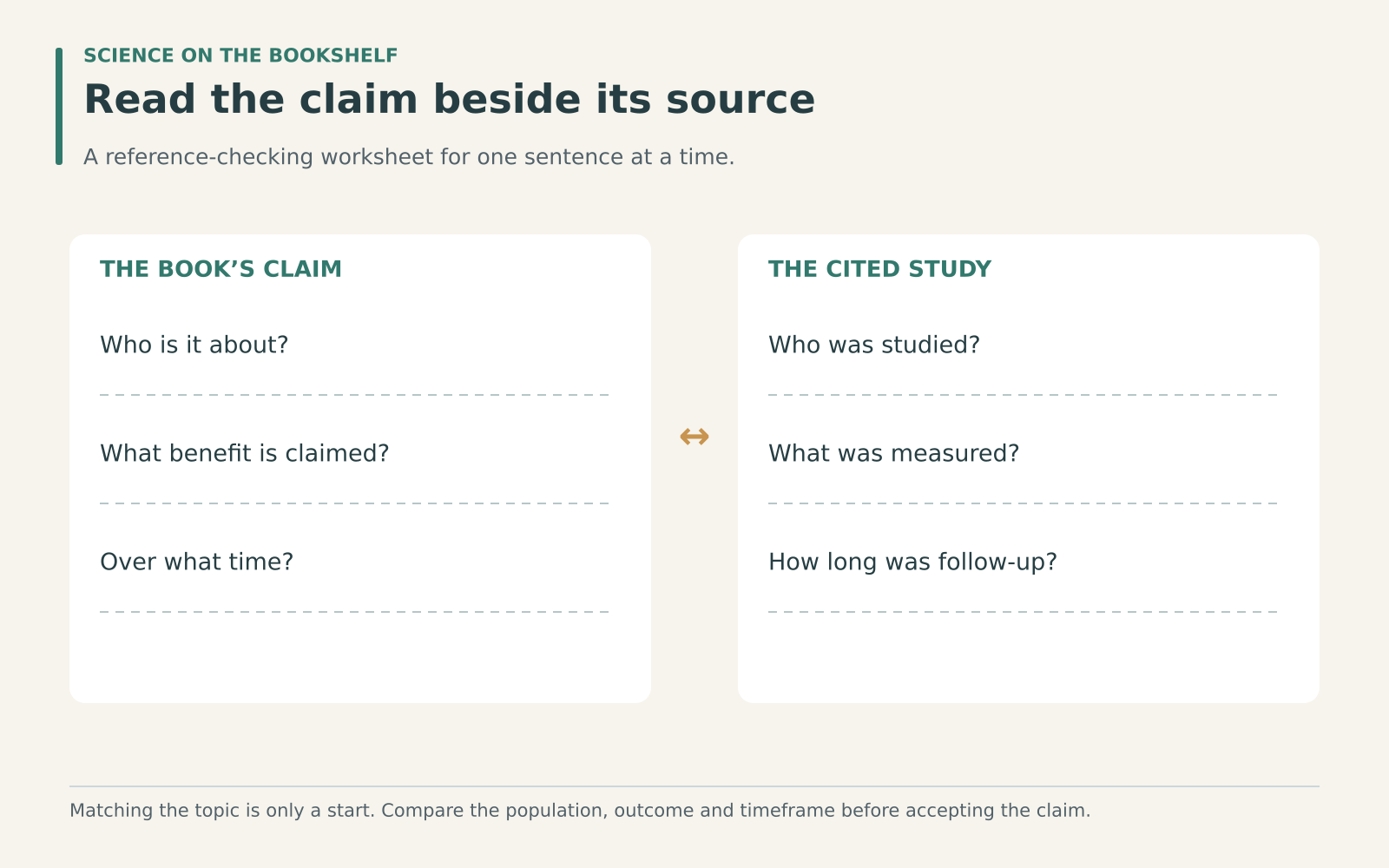
Use this worksheet for a single claim. Blank lines are intentional; the figure contains no research results. Image credits. A fictional peptide example
Imagine a book claims that “Peptide Q helps adults recover after exercise.” Peptide Q and the following study are fictional, created solely to show the checking process.
The cited experiment turns out to examine a laboratory marker in cultured cells exposed to Peptide Q. It does not recruit adults, measure recovery after exercise, or test a product sold to consumers.
Your note should not read “Peptide Q does not work.” That conclusion goes beyond this imaginary experiment too. A more accurate note is: “The cited experiment does not directly test the benefit stated in the book.”
You could then look for the author’s additional references. Perhaps another study addresses the missing question. If the book provides none, the gap remains. This is a precise criticism of the evidence presented, not a verdict on every possible study of the compound.
Watch for a change in the question
Pay attention when the subject shifts mid-paragraph. A discussion of one molecule can become a recommendation for an entire class. A finding in a selected patient group can become advice for everybody. A short observation can become a claim about lasting results.
Mark the point where the wording widens. Ask what additional evidence would be needed to justify that step. This technique keeps your reading focused on the argument instead of whether you like or dislike the author.
Also record the edition you are reading. An older book may accurately describe the evidence available when it was written. Its historical value and its suitability as current health guidance are separate questions.
Ask a question the author can answer
If you contact an author or publisher, make the request specific: identify the edition and page, repeat the claim, and ask which reference directly supports it. Avoid demanding that someone defend an entire book in one email. A useful response supplies a traceable source or clarifies the intended meaning. Save that reply beside your notes, distinguish it from the original printed passage, and consider whether a future edition needs clearer wording.
Keep a short reference-checking record
For each claim, save these six entries:
- The exact claim, book title, edition, and page.
- The reference supplied by the author.
- The source you located.
- What you read: abstract, full paper, or neither.
- The clearest match or mismatch between claim and study.
- The question still unanswered.
Stop short of assigning the whole book a scientific score after checking one passage. Your result is a small, documented assessment. Repeating it for several central claims gives you a firmer basis for deciding whether a book deserves closer reading, a cautious review, or further questions for a qualified professional.
-
Top Books to Read to Understand the Role of Testosterone in Men
Testosterone plays a critical role in men’s health, affecting everything from muscle growth and bone density to mood and libido. Gaining a deeper understanding of how testosterone functions and influences the body can empower men to take control of their overall wellness.
Whether you’re managing natural declines or considering supplementation, it’s essential to stay informed. This article highlights some of the top books that explore the science behind testosterone, its effects, and strategies for optimizing levels. For those exploring treatment options, we’ll also touch on how to buy testosterone online safely and responsibly.
1. The Testosterone Advantage Plan: Lose Weight, Gain Muscle, Boost Energy by Lou Schuler, Jeff Volek, and Michael Mejia
Overview: This book is a comprehensive guide to understanding and optimizing testosterone levels. It provides practical advice on how to boost testosterone naturally through diet, exercise, and lifestyle changes. The authors, experts in fitness and nutrition, offer a step-by-step plan to help men achieve their health goals.
Key Features:
- Detailed nutritional guidelines
- Exercise routines designed to increase testosterone
- Tips for improving energy levels and overall health
- Strategies for weight loss and muscle gain
Why Read It: “The Testosterone Advantage Plan” is perfect for those looking to enhance their hormonal health through natural methods. The book’s holistic approach makes it a valuable resource for anyone interested in boosting testosterone and improving overall wellness.
2. The Hormone Cure: Reclaim Balance, Sleep, Sex Drive and Vitality Naturally with the Gottfried Protocol by Dr. Sara Gottfried
Overview: Although this book is not solely focused on men, Dr. Sara Gottfried provides a comprehensive look at how hormones, including testosterone, impact health. She offers insights into how hormonal imbalances can affect energy, mood, and overall well-being, along with practical advice for restoring balance.
Key Features:
- Understanding the role of hormones in health
- Strategies for balancing hormones naturally
- Detailed protocols for improving sleep, energy, and libido
- Insights into the impact of stress on hormonal health
Why Read It: Dr. Gottfried’s holistic approach and accessible writing make this book an excellent choice for anyone looking to understand the broader context of hormonal health, including the critical role of testosterone.
3. Testosterone for Life: Recharge Your Vitality, Sex Drive, Muscle Mass, and Overall Health by Dr. Abraham Morgentaler
Overview: Dr. Abraham Morgentaler, a leading expert in testosterone therapy, offers a thorough exploration of testosterone’s role in men’s health. This book addresses common myths and misconceptions about testosterone therapy and provides evidence-based guidance on its benefits and potential risks.
Key Features:
- In-depth analysis of testosterone therapy
- Case studies and clinical insights
- Practical advice on managing testosterone levels
- Discussion on the impact of testosterone on various aspects of health
Why Read It: “Testosterone for Life” is an essential read for those considering testosterone therapy or looking to understand its role in health. Dr. Morgentaler’s expertise and clear explanations provide valuable insights into this often misunderstood topic.
4. The Testosterone Syndrome: The Critical Factor for Energy, Health, and Sexuality—Reversing the Male Menopause by Dr. Eugene Shippen and William Fryer
Overview: This book explores the concept of “male menopause” and how declining testosterone levels can affect men’s health. Dr. Eugene Shippen provides a detailed look at the symptoms of low testosterone and offers solutions for managing these changes effectively.
Key Features:
- Explanation of the “male menopause” phenomenon
- Symptoms and signs of low testosterone
- Natural and medical approaches to boosting testosterone
- Personal stories and clinical case studies
Why Read It: Dr. Shippen’s practical advice and thorough exploration of low testosterone symptoms make this book a valuable resource for men experiencing changes related to aging and hormonal balance.
5. Bigger Leaner Stronger: The Simple Science of Building the Ultimate Male Body by Michael Matthews
Overview: While primarily a fitness guide, “Bigger Leaner Stronger” by Michael Matthews also covers the role of testosterone in muscle growth and overall male health. Matthews offers practical tips for naturally boosting testosterone through diet, exercise, and lifestyle changes.
Key Features:
- Detailed workout routines
- Nutritional advice tailored for men
- Strategies for increasing testosterone naturally
- Tips for achieving and maintaining a lean, muscular physique
Why Read It: For those interested in how testosterone affects fitness and muscle development, Matthews’ book provides a balanced approach to understanding and optimizing this vital hormone through natural means.
Where to Buy Testosterone Cypionate
When considering testosterone replacement therapy (TRT), many individuals seek to find the most effective and reliable options for their needs. As the market continues to grow, products like testosterone propionate for sale have become increasingly popular. For those seeking to incorporate testosterone into their health regimen, it’s important to weigh all factors — from the potential health benefits to spiritual and ethical considerations. Whether you’re researching or preparing to start TRT, ensuring you are purchasing from a reputable source is essential for your overall well-being.
Conclusion
Understanding the role of testosterone in men’s health is crucial for maintaining vitality, strength, and overall well-being. The books listed above offer comprehensive insights into how testosterone works, its effects on the body, and practical advice for managing testosterone levels. Whether you are looking to boost your testosterone naturally or considering testosterone therapy, these resources provide valuable information to help you make informed decisions about your health.
-
Top Books for Fitness Enthusiasts: Building Strength, Endurance, and Understanding Testosterone
Embarking on a fitness journey involves more than just hitting the gym; it requires knowledge, motivation, and a comprehensive understanding of your body’s needs. Books can be an invaluable resource in providing the guidance and information necessary to achieve your fitness goals. In this blog post, we explore some of the best books for fitness enthusiasts, including insights into the role of testosterone in muscle building and overall health.
1. Bigger Leaner Stronger: The Simple Science of Building the Ultimate Male Body by Michael Matthews
Overview: Michael Matthews’ “Bigger Leaner Stronger” is a comprehensive guide for men looking to build muscle, lose fat, and get healthy. Matthews breaks down complex fitness concepts into simple, actionable steps, making it accessible for beginners and experienced lifters alike.
Key Features:
- Detailed workout routines
- Nutritional advice
- Information on supplements
- Strategies for increasing testosterone naturally
Testosterone Insight: Matthews discusses the importance of testosterone in muscle growth and overall male health, providing tips on how to naturally boost testosterone levels through diet, exercise, and lifestyle changes.
2. The New Encyclopedia of Modern Bodybuilding by Arnold Schwarzenegger and Bill Dobbins
Overview: Often referred to as the “bible of bodybuilding,” this comprehensive guide by Arnold Schwarzenegger covers everything from training techniques and nutrition to competition preparation and injury prevention. It’s a must-read for anyone serious about bodybuilding.
Key Features:
- Extensive range of training routines
- Detailed explanations of exercises
- Nutritional strategies
- Competition preparation tips
Testosterone Insight: While the book focuses more on training and nutrition, it touches upon the role of hormones, including testosterone, in muscle development and recovery.
3. You Are Your Own Gym: The Bible of Bodyweight Exercises by Mark Lauren and Joshua Clark
Overview: This book emphasizes the power of bodyweight exercises, making it ideal for those who prefer working out without equipment. Mark Lauren, a former Special Operations physical trainer, provides a variety of workouts that can be done anywhere.
Key Features:
- Over 200 bodyweight exercises
- Tailored workout programs
- Emphasis on functional strength
- Minimal equipment needed
Testosterone Insight: Lauren explains how bodyweight exercises can help boost testosterone levels by incorporating compound movements that engage multiple muscle groups.
4. The Men’s Health Big Book of Exercises: Four Weeks to a Leaner, Stronger, More Muscular You! by Adam Campbell
Overview: This book is a comprehensive resource for anyone looking to improve their fitness. It includes hundreds of exercises, complete with photos and detailed instructions, as well as workout plans tailored to various fitness goals.
Key Features:
- Hundreds of exercises with photos
- Detailed workout plans
- Nutritional advice
- Tips for improving overall fitness
Testosterone Insight: Campbell covers the importance of testosterone in achieving fitness goals and offers advice on how to naturally enhance testosterone production through specific exercises and dietary choices.
5. The Testosterone Advantage Plan: Lose Weight, Gain Muscle, Boost Energy by Lou Schuler, Jeff Volek, and Michael Mejia
Overview: This book is specifically focused on the role of testosterone in men’s health and fitness. It provides a comprehensive plan for optimizing testosterone levels through diet, exercise, and lifestyle changes.
Key Features:
- Strategies to boost testosterone naturally
- Nutritional guidelines
- Exercise routines designed to increase testosterone
- Tips for improving overall health and energy levels
Testosterone Insight: The entire book is dedicated to understanding and optimizing testosterone, making it an essential read for those looking to enhance their hormonal health as part of their fitness journey.
6. Spark: The Revolutionary New Science of Exercise and the Brain by John J. Ratey
Overview: While not exclusively focused on bodybuilding, “Spark” explores the profound impact of exercise on brain health and cognitive function. John Ratey, a clinical professor of psychiatry, delves into how physical activity can enhance mood, learning, and mental health.
Key Features:
- Connection between exercise and brain function
- Benefits of different types of exercise
- Impact on mental health and cognition
Testosterone Insight: Ratey discusses how exercise can influence hormonal balance, including testosterone levels, and the positive effects this has on both physical and mental health.
Conclusion
These books provide a wealth of knowledge and practical advice for anyone looking to improve their fitness, build muscle, and understand the role of testosterone in their health journey. Whether you’re a beginner or a seasoned athlete, incorporating the insights and strategies from these resources can help you achieve your fitness goals more effectively.
Remember, while books offer valuable guidance, it’s essential to listen to your body and consult with healthcare professionals when making significant changes to your fitness routine or addressing hormonal health.
Authors
Read about authors of the world’s classic literature.
Community

Connect with Fellow Book Lovers
Join our vibrant community of readers and literary enthusiasts. Share your thoughts on books, participate in discussions, and exchange recommendations. Our forums and social media channels are the perfect places to connect with others who share your passion for literature.
Subscribe
Never Miss an Update
Subscribe to our newsletter to receive the latest updates from LitWeb directly in your inbox. Be the first to know about new biographies, bibliographies, blog posts, and special events. Sign up today and stay connected with the literary world.
Useful Links:
© 2024 LitWeb. All rights reserved.